Medical Care Fails
Hospitals and clinics lose reliable power for life-saving equipment.
Renewable Disaster Relief
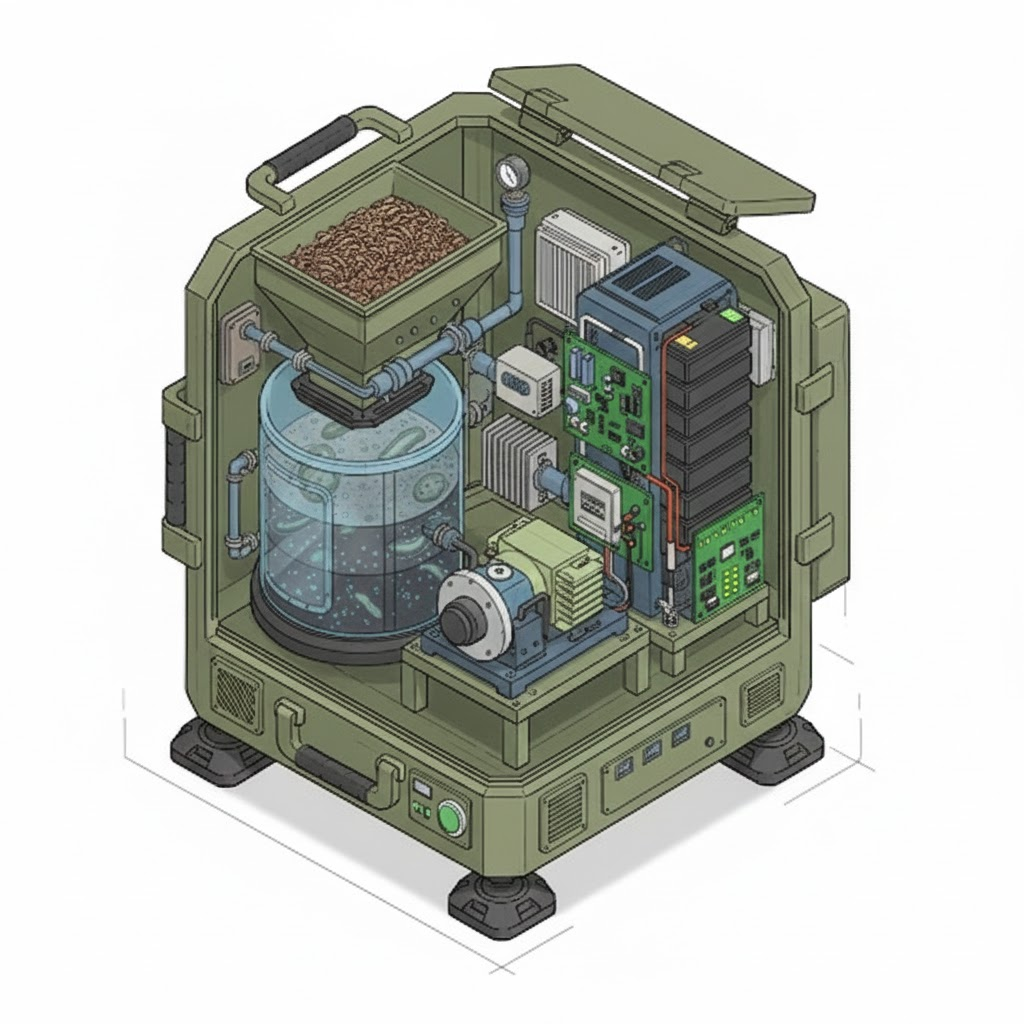
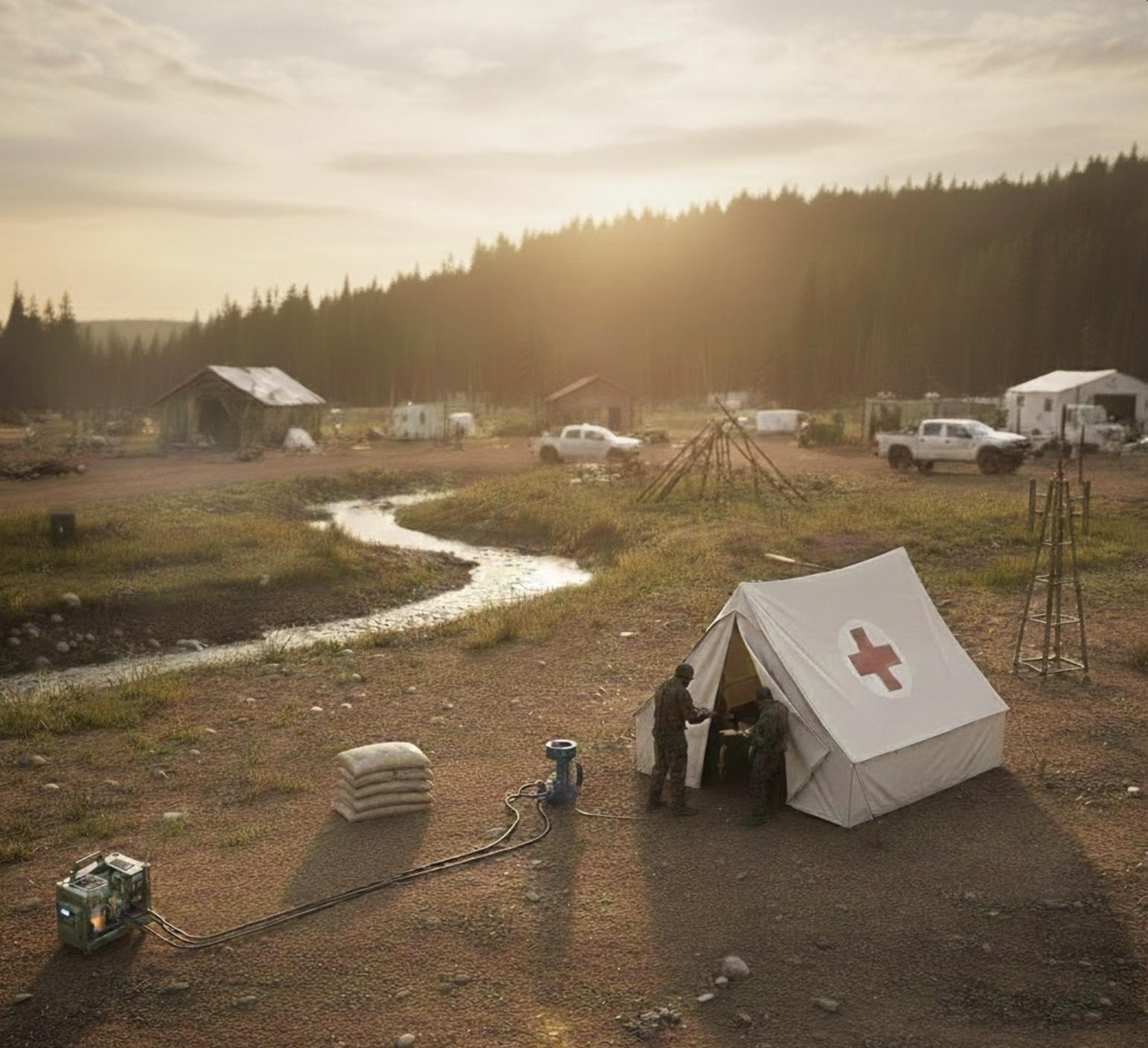
The Portable Biomass Box converts local organic waste into electricity, bringing sustainable power to disaster zones when fuel deliveries fail.
The Challenge
Hurricanes, wildfires, and floods can take out power grids for days. Diesel generators are costly to deliver, difficult to scale, and fail when fuel lines break.
Hospitals and clinics lose reliable power for life-saving equipment.
Pumps and purification systems shut down without electricity.
Families and responders lose the ability to coordinate help.
Our Innovation
PBB turns abundant organic debris into steady electricity, eliminating the need for fuel convoys and keeping critical systems running in the hardest-hit zones.
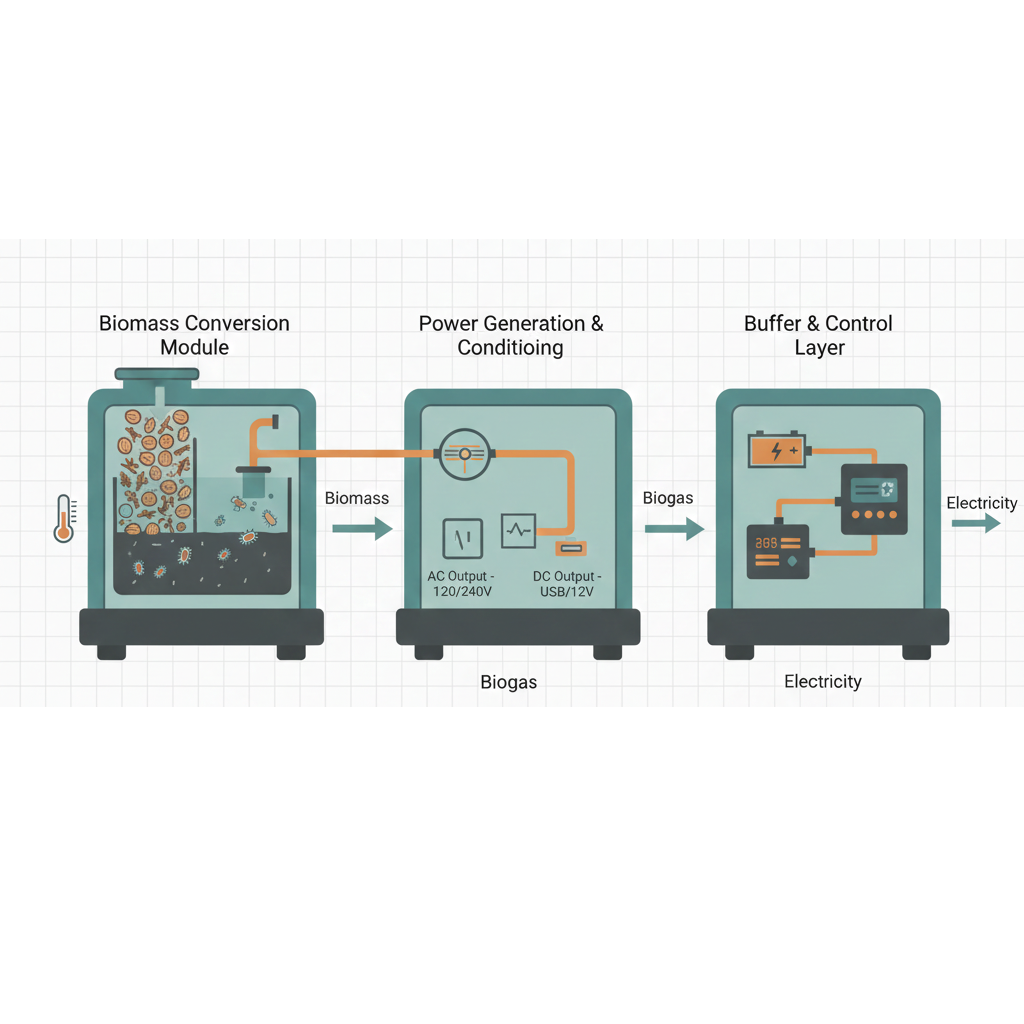
Wood chips, crop residue, and organic debris.
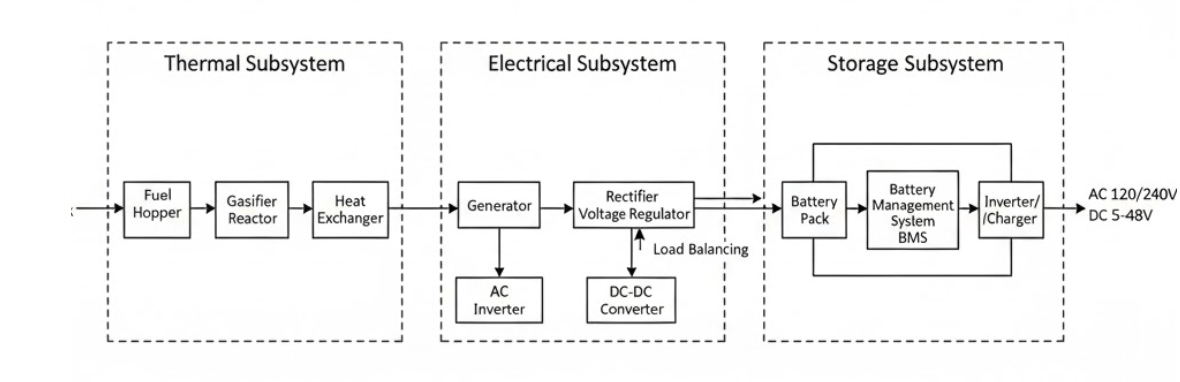
A controlled process converts biomass into energy.
AC/DC power for medical care, water systems, lighting, and phones.
Both PBB founders have been affected by natural disasters, so we understand the hardships people face and the uncertainty that comes with losing access to electricity.
Interact
Drag to rotate, scroll or pinch to zoom.
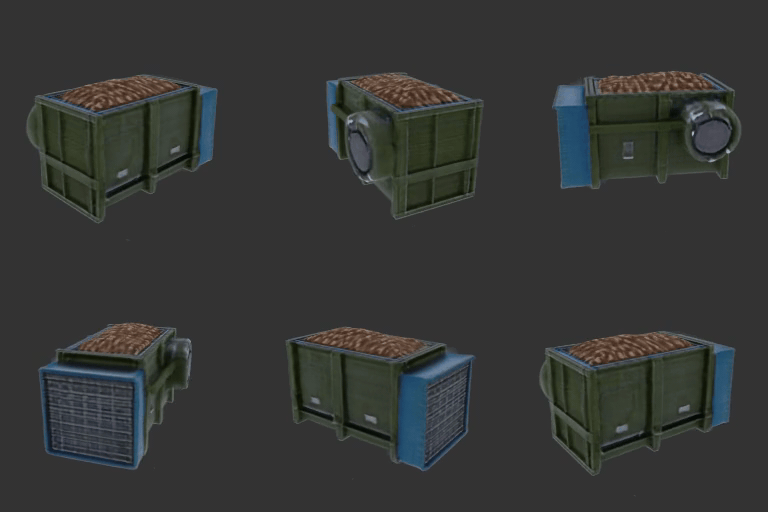
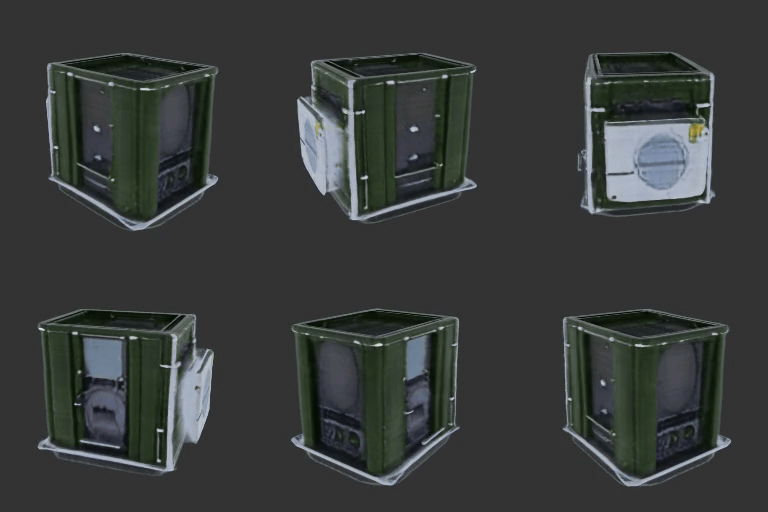
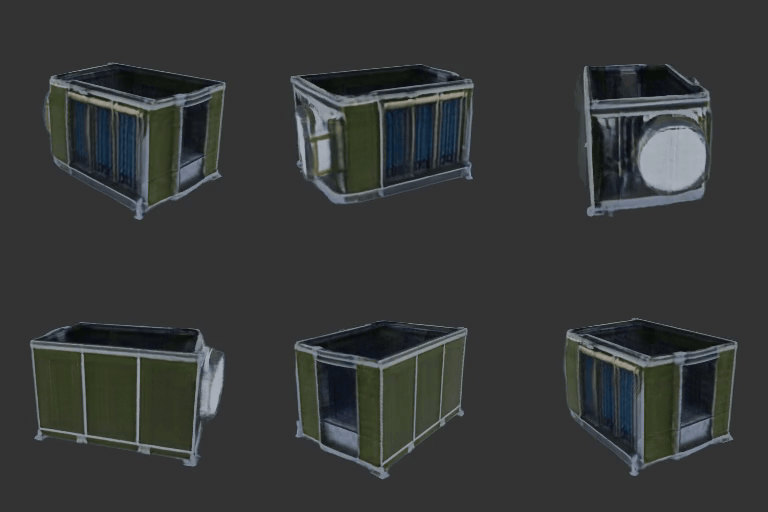
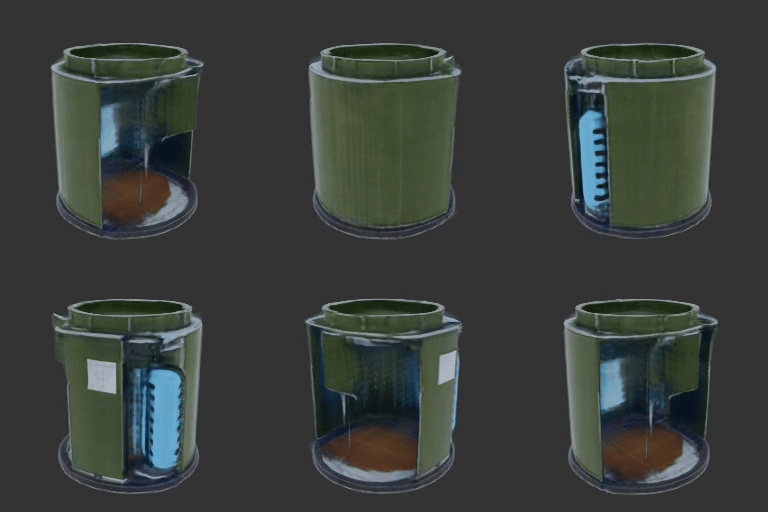
Prototype Components
Why PBB
No diesel dependency, only locally available organic material.
Set up quickly to restore power within hours.
Safe and reliable for medical-grade equipment.
Renewable energy that reduces emissions.
Our Impact
By turning waste into power on site, PBB keeps essential services running while communities rebuild.
kWh of daily output per unit
of people served per deployment
diesel fuel required
Our Team
Formed in our high school Entrepreneurship Club, we bonded over shared experiences with natural disasters and built PBB to help when power matters most.

Co-Founder
Leads business strategy and market analysis, driven to help communities impacted by natural disasters.

Co-Founder
Passionate about renewable energy and off-grid power systems, focused on rapid deployment design.
Our team formed in high school through the Entrepreneurship Club, where we bonded over shared experiences with natural disasters. Ettan’s family was directly affected by Hurricane Priscilla, while Matthew came from a town that suffered repeated flooding and infrastructure damage due to regular monsoons. We’d hang out after the club and talk about prevalent issues. When we found out that we were both affected by natural disasters, we created the Portable Biomass Box (PBB).
When the grid goes down, clinics and field hospitals can lose power for critical devices, lighting, and temperature-sensitive supplies.
Safe water depends on electricity for pumping, treatment, and distribution. When power fails, systems can shut down quickly.
When networks and charging go offline, responders can’t coordinate and families can’t reconnect, even if they’re nearby.
PBB is designed to run on locally available biomass, reducing dependence on fragile fuel supply chains after a disaster.
Disaster zones need power fast. PBB is built for quick setup and straightforward operation, so teams can restore electricity within hours.
Sensitive equipment needs consistent, regulated power. PBB focuses on delivering reliable electricity for mission-critical applications.
By converting organic debris into power, PBB reduces reliance on fossil fuels and helps lower emissions compared to traditional generators.
Reliable electricity keeps care moving in clinics and field hospitals when the grid is down.
Electricity is often the limiting factor for pumping and treatment. PBB helps keep water systems operating on site.
Safe shelters need lighting, basic power, and reliable charging, especially overnight and during multi-day outages.
Power enables coordination: charging devices, running radios, and supporting connectivity hubs for responders and families.
Matthew is passionate about expanding renewable energy and brings knowledge of off-grid power systems. He came from a town that suffered repeated flooding and infrastructure damage due to regular monsoons, and he has invested time in potential solutions. His desire to assist in disaster relief is motivated by the fact that his grandparents are still in China.
Ettan has more experience with entrepreneurship and leads business strategy and market analysis. His family was directly affected by Hurricane Priscilla, and he is determined to develop a solution that could help people and places impacted by natural disasters.